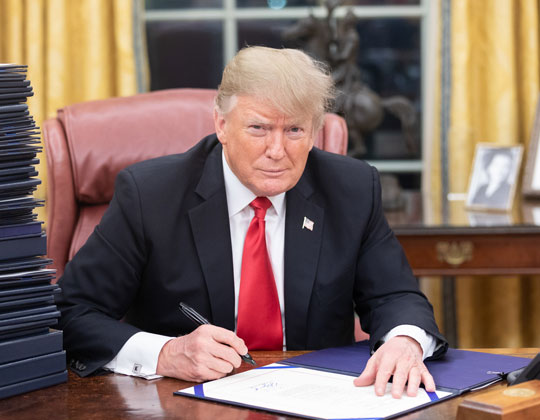
Amid the ongoing Russia and Ukraine war, in a recent Interview with Fox Business, Mornings With Maria Published on January 22, 2026, President Donald Trump claims the U.S. never really needed NATO, challenging America’s role and suggesting a possible withdrawal.
The North Atlantic Treaty Organization (NATO) is a military alliance formed in 1949 to provide collective security among members, primarily between Europe and North America. Article 5 of their agreement states that an attack on one member is an attack on all the members, leading to them backing each other up in times of conflict.
In recent years, President Trump has questioned the value of NATO and suggested a withdrawal of the United States from the alliance, as he believes that the United States is contributing more to NATO than it receives in return. Trump argues that NATO relies too heavily on U.S. military power.
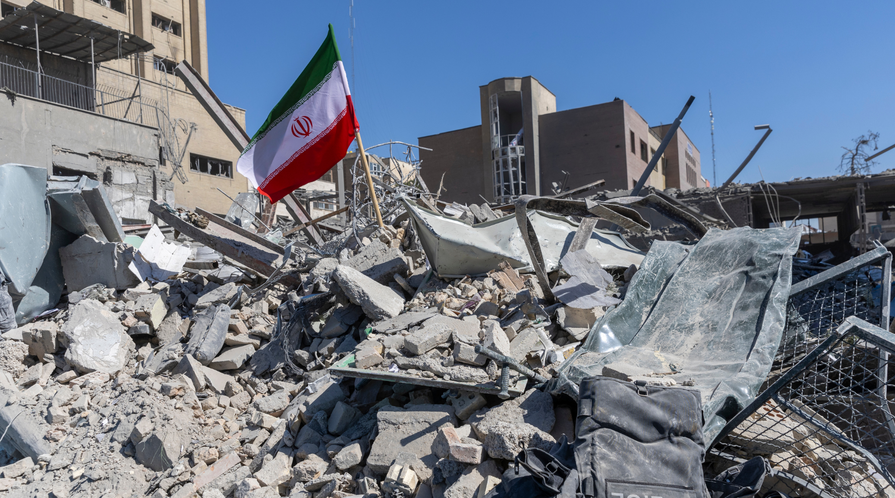
The debate over NATO is taking place during a period of heightened global instability. The ongoing war between Russia and Ukraine has pushed NATO to increase troop deployment and military coordination along Ukraine’s eastern border, while also expanding the alliance itself. Within this context, President Donald Trump has renewed criticism of NATO, arguing that the United States carries a disproportionate share of the alliance’s military burden.
Economics, Government, and History Teacher, Mr. Ray Lehner, explains that the main reason for driving the president to take this stance is the need for a guideline that NATO should set for countries to spend 2% of their Gross Domestic Product (GDP) on the military. “The President and his advisors believe that NATO members do not put enough of their domestic resources towards their own militaries,” adding that President Trump has similar demands for U.S. allies in the Asia Pacific region. “I think the president is saying that we want to help you, but you must help yourself first,” adding that Trump is “laying down the same challenge to NATO.” While more NATO countries have recently increased military spending, Trump’s statements have raised questions among allies about the long term reliability of the United States’ commitments to NATO when global security threats remain high.
In an interview between President Donald Trump and Fox Business’s Mornings with Maria, Trump argued that the United States “never really needed” NATO and claimed that the alliances have benefited more from U.S. involvement than the U.S. has in return. Repeatedly stating that NATO countries should contribute more to their own defense. After his remarks, he gained a sharp response from British Prime Minister Keir Starmer, calling the President’s comments “insulting and frankly appalling” in a televised interview, and he urged an apology from the United States.
Supporters of President Trump’s position argue that requiring allies to spend more on their own defense could reduce the burden on U.S. taxpayers. Critics worry that a withdrawal would weaken collective security and embolden rival nations. Mr. Lehner also added that “Being in NATO or not in NATO, acting unilaterally is always an option.” The U.S. could still maintain individual agreements with European nations.
On the other hand, Ms. Elliott, AP US Gov, AP Comp Gov, AP Micro, and American Government teacher, stresses the symbolic importance of the relationship we have with NATO and what the withdrawal would signify to the rest of the world. “By withdrawing from NATO, we are essentially abandoning our long-standing allies,” she said. “It creates a great deal of global insecurity as our reputation as the world leader and steady, stable force in diplomacy is seriously disrupted.”
A potential U.S. withdrawal would not only affect the government but also workers, businesses, and military communities. Ms. Elliott highlights the possible economic consequences we might face. “There are real implications for companies that hold U.S. defense contracts held by California companies who currently sell millions of dollars worth of product to NATO countries,” furthermore explaining, “Potentially, this could be a loss of thousands of jobs and millions of dollars.” Mr. Lehner also noted that the defense spending decisions are also influenced by rising domestic costs such as Social Security, Medicare, Medicaid, and interest on the national debt, which could eventually force reductions in U.S. military spending regardless of our status in NATO.
On a more local scale, California plays a major role in the U.S. economy, with our large ports, advanced technology industries, and significant military installations. Potentially leading to California taking a more independent stage with global connections, “California being one of the top economies in the world makes it difficult to turn down,” Ms. Elliott noted, referencing Governor Gavin Newsom’s previous decision to align California with the World Health Organization after the U.S. withdrew. However, she cautioned that not all countries would be willing to negotiate directly with a U.S. state, especially if it could cause a strain in relations with the federal government.
The debate over NATO reflects a larger question about the United States’ role in the world and how the U.S. allocates its resources. How will these alliances adapt to changing security threats? As conflict continues in Eastern Europe and tensions are rising globally, debates over defense spending and shared responsibility become more prominent in the geopolitical landscape.
Whether the United States remains in alliance with NATO or shifts towards an alternative, both decisions have the potential to influence global stability and relations, and our economy. Allies of the United States and rivals alike are most likely closely watching the U.S. and looking for signals, as a change in alliances has the ability to shape international power dynamics.