
In the complex, unpredictable world of investing, there are countless different areas in which you can allocate your money. Unfortunately for today’s youth, we are constantly bombarded with half-researched, shady advice from “investing gurus” on TikTok, begging you to put all of your savings in a certain company, or family members at the annual family gathering who swear they have found the next GameStop. While these people can be right once in a blue moon, why put your hard-earned money at such a risk? Instead, you can look into allocating your money into three of the most proven methods for securing profit in our chaotic markets. The reality is that any investment in today’s market is a gamble; fortunately, there are proven, researched methods of investing that can shield you from unnecessary risk. *This article does not include any financial advice. Thoroughly research any investment before allocating real money to it.

- High Yield Savings Account (HYSA)
A high-yield savings account is a place to store money that you don’t plan on using for daily expenses. They work just like a traditional savings account, but pay a much higher annual percentage yield (APY) or interest rate. Depending on the bank, high-yield savings accounts can offer from 1.5% APY up to 5% APY, with the average being around 1.6%. To put it into perspective, putting $1000 into a traditional savings account over a twenty-year period, offering an average of 0.39% APY, will appreciate to roughly $1082. On the other hand, putting the same amount of money into a HYSA that offers a 3.5% APY (Ex: Marcus by Goldman Sachs and Capital One) over twenty years will appreciate to a considerable $1989.79. Clearly, HYSAs offer tremendous appreciation over long periods of time when compared to traditional savings accounts.
Of course, with all investments come risks. Fortunately, high-yield savings accounts are generally low-risk investments, especially when insured. Some risks include variable interest rates, inflation, and withdrawal fees. Despite these risks, holding money in these accounts has proven to be a low-risk, medium to high-reward investment, especially for those not sure of places to put their money. An important thing to consider is that even if your money grows in this account, inflation can often reduce your earnings over time since your money is appreciating at a relatively lower percentage than it would be if you invested in the stock market. If we circle back to the previous hypothetical, we can see that putting $1000 in a HYSA offering 3.5 APY will result in roughly $1082. While this is happening, lets assume that in the USA, there is 2.5% inflation over the same year period. Your real earnings would be around 1%, meaning you would be earning roughly $10 in purchasing power, or $1010 over that period.
- Certificates of Deposit (CDs)
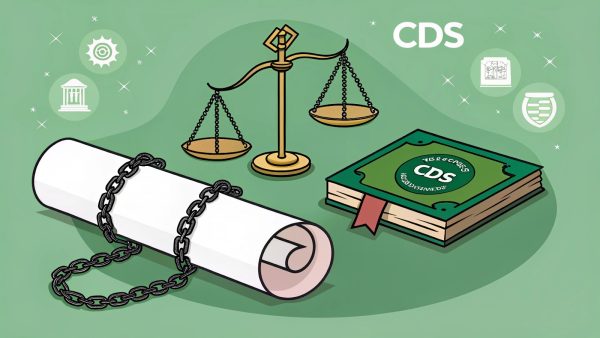
A certificate of deposit is a federally insured savings account, offering a fixed interest rate over a predetermined period of time. Commonly, you pick a bank or company you want to have a CD contract with, and you enter a one to five-year contract in which you agree not to touch the invested money until the contract has expired. In comparison with traditional savings accounts, CD rates do not fluctuate even if interest rates drop, providing a stable investment strategy. Certificates of Deposit can offer anywhere from 1.9% APY up to over 4% APY (Ex, Marcus by Goldman Sachs and Everbank). These rates are significantly higher than the average traditional savings accounts, and are comparable to high-yield savings accounts, yet they offer a more stable investment. There are even no-penalty CDs offered by banks such as Marcus by Goldman Sachs, which allow you to withdraw the money whenever you desire. Investing $1000 into a 13-month, 3.95% APY contract with Marcus by Goldman Sachs, you would earn roughly $1042. If you continuously enter CDs for over twenty years, your earnings will be similar, or even exceed, those of a high-yield savings account.
One major downside to this method is that certain banks require high minimum deposits, meaning you must offer up significant amounts of expendable cash in order to have access to the account, which can be limiting for beginner investors. Also, if interest rates exceed the rates offered by the CDs, and the certificate of deposit has penalties, you are locked in a contract that will guarantee to lose you money, assuming hte interest rates do not recover. At the same time, CDs are often shorter contracts (1-5 years), so if interest rates exceed the offered interest, you will not be losing much money in retrospect.
- Index Funds
Finally, the last type of investment will be the only one on the list that is offered through the stock market. When you hear the name “stock market”, you likely think fluctuating stock prices(volatility), people gambling their life savings on companies to succeed, and high-risk, high-reward deals. While these things absolutely happen in the stock market, you can avoid all of the high-risk noise by investing in Index Funds. Index funds are investment funds that passively tracks a market index by holding the similar assets in similar proportions. They aim to match or slightly outperform the overall stock markets performance through broad diversification. One great example is the S&P(Standard and Poors) 500, which tracks the 500 largest publicly-traded companies in the united states. Over the past 20 Years, the S&P 500 has returned roughly 10-11% nominal APY which equates to roughly 6% of real appreciation(after inflation).
While historically index funds have appreciated over time, there are instances, such as the 2008 financial crisis, in which the fund will depreciate greatly. Outside of large-scale economic crisis, Index funds are generally safe from market volatility as they pool diverse companies into a single fund, which helps protect against market volatility.
Overall, if you are a student with excess birthday money, or you have just landed a new job, it is important to have an idea of what you want to do with your money. If you are interested in investing your excess income without wanting to constantly watch the markets and thoroughly research certain stocks, these investment options are great for lower-risk with medium to high returns. For a shorter-term place to put your money while earning interest, HYSAs and CDs are solid investment choices. For longer-term appreciation while relatively lower volatility, Index funds are historically effective options. Naturally, these options carry risks, yet their historical returns demonstrate that your money will be safe in choosing these methods.