As the Trump administration’s conservative agenda approaches the final months of its first presidential year, a certain pattern has become particularly clear: its ongoing political clash with Democratic-led states that continues to leave vulnerable Americans in the crossfire. As of December 2nd, these Americans now include recipients of SNAP, the Supplemental Nutrition Assistance Program funded by the USDA’s Food and Nutrition Service.
The administration has threatened to withhold SNAP benefits from Democratic-controlled states who’ve refused to provide the names and immigration status data of their recipients. This legislative demand comes just nine months after twenty-one Democratic-run states and the District of Columbia previously sued the administration over the same request for information in February. It also follows an April Memorandum aimed at preventing “‘illegal aliens’ and other ineligible people” from receiving public benefits – despite the fact that undocumented immigrants are already ineligible for them.
A 2022 Congressional Research Service (CRS) report makes this contradiction undeniably clear: outlining how undocumented immigrants are ineligible for federal public benefits, including SNAP, and describing the program’s stringent eligibility requirements based on status.
Yet the administration continues to pursue this threat, seemingly prioritizing political conflict over established fact. And while this threat won’t dramatically punish state governments, its impact on residents – many of whom take no role in the conflict– is likely to be immediate and devastating.
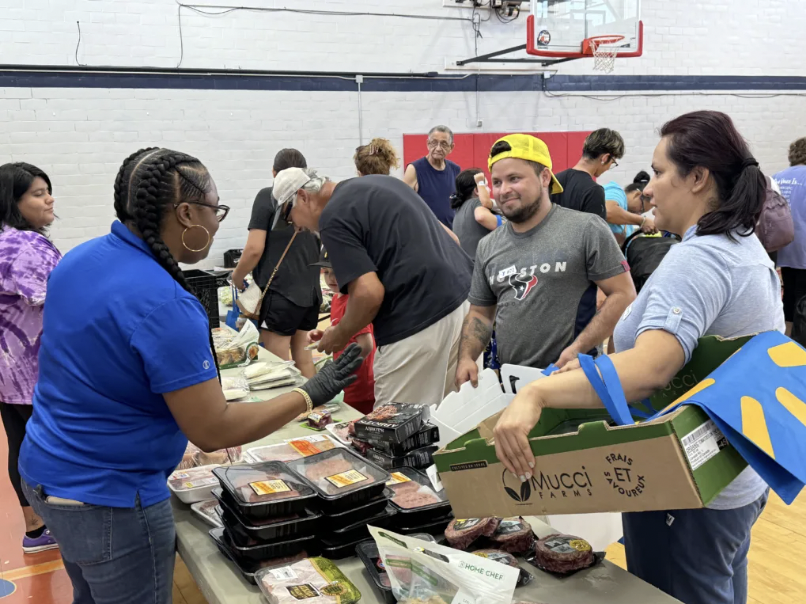
Roughly 42 million Americans rely on the Supplemental Nutrition Assistance Program (SNAP) to help buy groceries. In California, this number ranges between 5 and 5.5 million residents; in Alameda County, up to 179,000. On November 1st, during the government shutdown, many of these same Americans panicked when the administration announced that it would no longer fund statewide SNAP benefits due to budget restrictions. At the time, this meant that the monthly EBT reloads (Electronic Benefit Transfer) necessary to feed their families simply never arrived on their cards.
Ms. Asabi, a social worker from the Bay Area, directly witnessed this devastation the morning it happened, explaining, “I started getting calls from some of my patients who were concerned and requesting information on food banks. It was distressing –and it felt almost dystopian because it was like, ‘is this really happening? Are they really withholding food stamps?’ Because from my understanding this was the first time in history they had withheld funding for them.”
The 43-day government shutdown was unprecedented: not only because of its duration, but due to it being the first time in modern history that the Supplemental Nutrition Assistance Program experienced a significant lapse in funding.
“They weren’t able to feed their families. I have patients with children — school aged children — and they were concerned because having to spend their money on food instead of debt, other bills, their rent, or their mortgage could significantly affect their housing stability.”
The shutdown’s detrimental impacts reveal what happens when basic human needs collide with what many view as “distant” legislative decisions – and inform what could occur if SNAP benefits are further entangled within a partisan conflict that willfully disregards the lives of its constituents. Millions of vulnerable Americans shouldn’t be placed at the expense of partisan policy-making, nor be treated as ‘bargaining chips’ meant to leverage one party’s power over the other.
The administration has set a state-compliance deadline for December 8th, but as legal battles continue, both the fixed deadline and USDA’s potential pause on SNAP funding remain uncertain.
In Oakland, and throughout the East Oakland neighborhoods surrounding O’Dowd, thousands of SNAP recipients continue to feel this instability – experiencing the socioeconomic consequences of decisions made far beyond their control. As students living in and witnessing this disparity, it’s crucial that we recognize how national policy and partisan conflict affect the lives of those entirely uninvolved.
Through our involvement in local food drives, co-ops, and other social justice initiatives, we can stand in solidarity with our community members, lessening the socioeconomic burden, and striving toward greater stability for all.