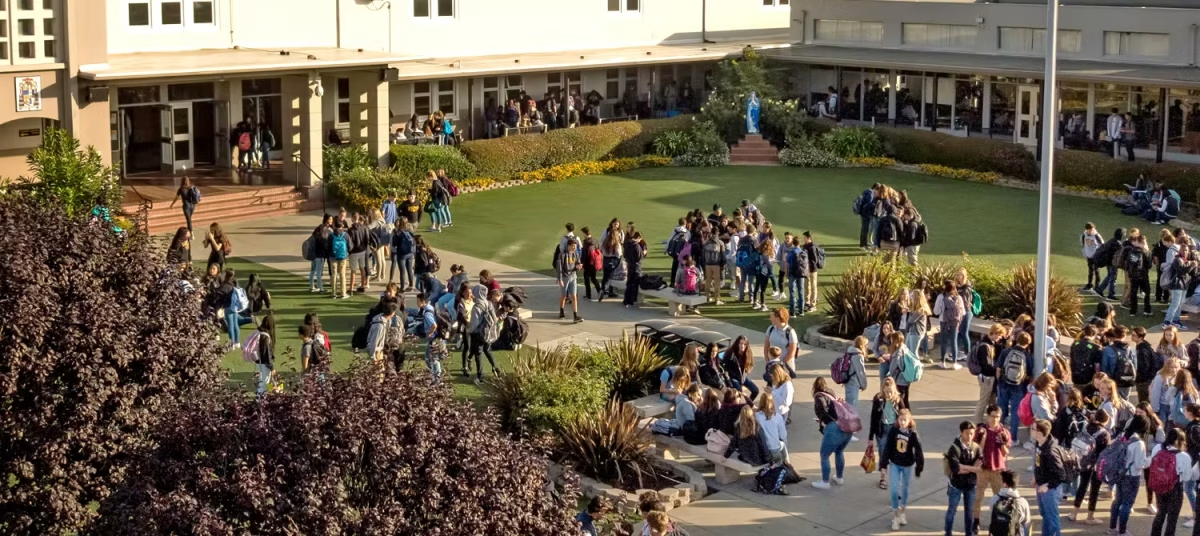
Over the past few years, tuition at Bishop O’Dowd has slowly climbed, raising an important question for students’ families: what is causing these increases and where is the money going?
During the 2022-2023 academic year, tuition at Bishop O’Dowd was $22,756. The following year, 2023-2024, tuition rose by 5.6% at $24,040. Now, for the 2025-2026 school year, tuition has reached $27,810. In only three years the tuition has increased more than $5,000, a 22% jump.
According to the school, one of the main reasons behind the rise in tuition is a three year plan to increase salaries for faculty and staff. This effort aims to support teachers in one of the most expensive regions in the country. The Bay Area’s high cost of living and ongoing inflation have also contributed to rising operational expenses, making it more costly to run and operate a private school.
This reasoning aligns with broader trends across private education in our area. Schools across California have experienced similar pressures including competitive salaries, rising housing costs for staff, and increased expenses for maintaining campus facilities and programs.
However, not all families and former students feel that the rising tuition translates into a better experience.
Some online reviews show frustration with how money is spent and how accessible the school feels. One reviewer wrote, “This school only cares about profit over anything. It costs money to attend your reunion. I personally would not come back to visit.” Another parent shared a more critical perspective, sharing, “I paid for books, uniforms and a tuition that I couldn’t afford… Nothing is free or part of tuition at O’Dowd; an evening ‘Finals Prep’ class costs $50.”
There are also concerns about whether the quality of education matches the cost. A review from 2022 noted, “On top of it all, it costs a fortune. For that kind of money, you would HOPE to get an education where everyone felt equal and included…”
While online yelp reviews do not represent every student’s experience, they highlight a recurring theme that some families feel the financial burden is not always matched by support, resources, or inclusivity.
The reality is finding a solution somewhere in between. On one hand, Bishop O’Dowd and many private schools are facing serious financial pressures. Paying staff fairly and maintaining programs in the Bay Area is expensive. On the other hand, rising tuition places a growing strain on families, especially those already struggling to afford private education.
This tension accentuates broader questions about equity and accessibility. As tuition increases, does the school risk becoming less accessible to middle to low income families? And how can schools balance financial sustainability with their mission to serve students?
Ultimately, the answer comes down to staff salaries, inflation, and operational costs. But for families, the more important question is whether those investments are being felt in the classroom, in student support systems, and in the overall school environment.