“Climate change is not going away. It’s here to stay. We need to adapt.” Karen Proehl.
Twenty years ago, the tragedy of Hurricane Katrina took place in New Orleans, Louisiana. This led to a very devastating time for the citizens of New Orleans in our country. What if it was all avoidable? The American government has underestimated the impact of climate change for the past 20 years, resulting in a lack of storm policy that prevents storms, a product of climate change, from causing millions of dollars in damage and deaths that could have been prevented.
On August 29, 2005, Hurricane Katrina arrived in New Orleans, taking 1400 lives and causing $81 billion in property damage. The first red flag was the government being completely unprepared, especially in regard to the levee system. Levees only protect to a certain extent, not for a Category 5 storm.
There’s so much room for floods that the height of the rising water would overflow the levees. The structure can be destroyed in a short period of time. The New Orleans levee system was built and constructed by the U.S Army Corps of Engineers, which took full responsibility for the flawed design of the levees that failed. The knowledge about the faults of these structures kept by the Louisiana government was a significant failure, as well as the lack of funding from the federal government which could have changed the designing of the levees.
The collapse of the levee caused so much damage and was fatal. The main problem was that New Orleans was and is still reliant on the unreliable levee system. It was very apparent that the structures were unreliable years before Katrina hit New Orleans.
Today, the city of New Orleans still does not take into account the likely outcome of having a storm like Katrina again in the future. The wetlands near the city have been eroding for decades, which contributed to the substantial impact of Katrina. In July of this year, the officials of the state of Louisiana scrapped the project to help restore these wetlands. Two decades in the fight for change or to care is still strong.
The second storm response failure is Hurricane Maria. This Category four hurricane arrived in Puerto Rico on September 20, 2017. FEMA (Federal Emergency Management Agency) failed to prepare for the prior hurricane season, so they were deeply unprepared for Hurricane Maria.
The failures in infrastructure meant that the emergency plans were only fit for a category one storm. So, the impact and the damage the storm ended up costing, even though it was very clear, FEMA underestimated the impact, alongside the emergency failure, because of the power outages that led to the lack of effective communication.
These problems caused a disruption and a delay in mortalities being reported. The failures lie in the hands of FEMA and the federal government, leaving the people of Puerto Rico at a disadvantage and with inadequate emergency plans for storms.
The last and final example was very recent and tragic, on July 4th, 2025, six Texas communities were hit with extreme heavy rainfall. The flooding caused by this rainfall became the deadliest flooding event in the US in the past 50 years; 130 people died as a result of the flooding during the storm.
The failure leading up to the tragedy is very apparent, as the Trump administration and the Department of Government Efficiency, a month prior to the National Weather Service, had lost 600 staff members. When the National Weather Forecast officers faced vacancies, the NWS was affected because of the cuts being made to NOAA.
These services enable people in communities like Kerr County, Texas, to access emergency services and maintain communication with others. Before the tragedy, the government had been completely aware that the Guadalupe River is one of the most dangerous rivers in the United States for flash floods.
The real betrayal lies with Kristi Noem, the DHS secretary. She did not renew contracts for four different companies, and on top of that, she fired hundreds of call center contractors. She made it so it was unfeasible for the survivors to reach FEMA.
The call center answered 99.7% of their calls prior to these actions; however, after July 6, only 36% were responded to, and only a whopping 10% on the seventh. This is a direct recent example of how storms are still not taken seriously. The actions of the government do not reflect that they care about the people who live in this country.
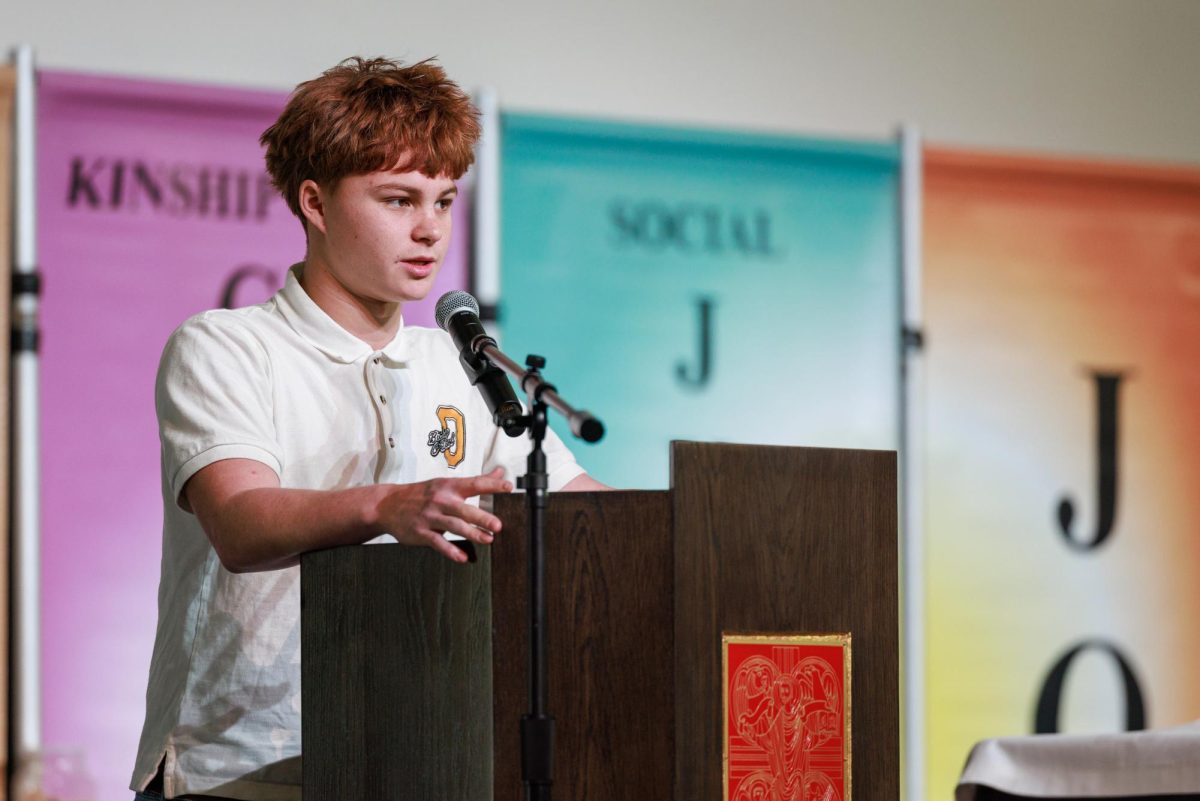
Karen Proehl, AP Environmental Science teacher at O’Dowd, reflects on the failures and our government’s disregard of the climate crisis, “this is much larger than just climate. It’s vaccines, it’s medicine, it’s attacks on institutions. So we can’t ignore that there’s a larger thing going on.” She continues, “The federal government can help, but we, the people, need to convince them that that’s where we want to go as a top priority.”
There is good news. Even though it is just the beginning to combat climate change and to help the areas that are being affected the most by these storms and failed policies, our government officials are starting to take a stance on this issue.
They are working to push the climate change conversation to the forefront. The United States Climate Alliance is a coalition of 24 governors who are leading state-led climate action that is making huge strides. On September 10th, the House of Appropriations Committee rejected the proposal to eliminate NOAA’s budget by one-third.
Additionally, a Senate bill is proposed to maintain the agency’s current budget. To be clear, there is work being done. We just need to do it together, not only in the United States, but as humans we need to take the change to save our planet, cause there is no time to waste. It is crucial, not only as U.S. citizens but as global citizens, to keep in mind that climate change is not going away; it is here to stay as we live the next three years under the current presidential administration.
As an O’Dowd community, we put emphasis on the environment, whether it’s the work of eco-leaders, the living lab, or assemblies. We are the future of this planet. The question we need to ask ourselves is, what can we do to save it?